The biggest custom dust bag mistakes on a first order are the wrong size, a fabric picked from a photo, and a mockup approved too fast. Customized Dust Bags makes all three easy to avoid with a minimum of 12, a free mockup within 24 hours and unlimited free revisions, so you can check every detail before production starts.
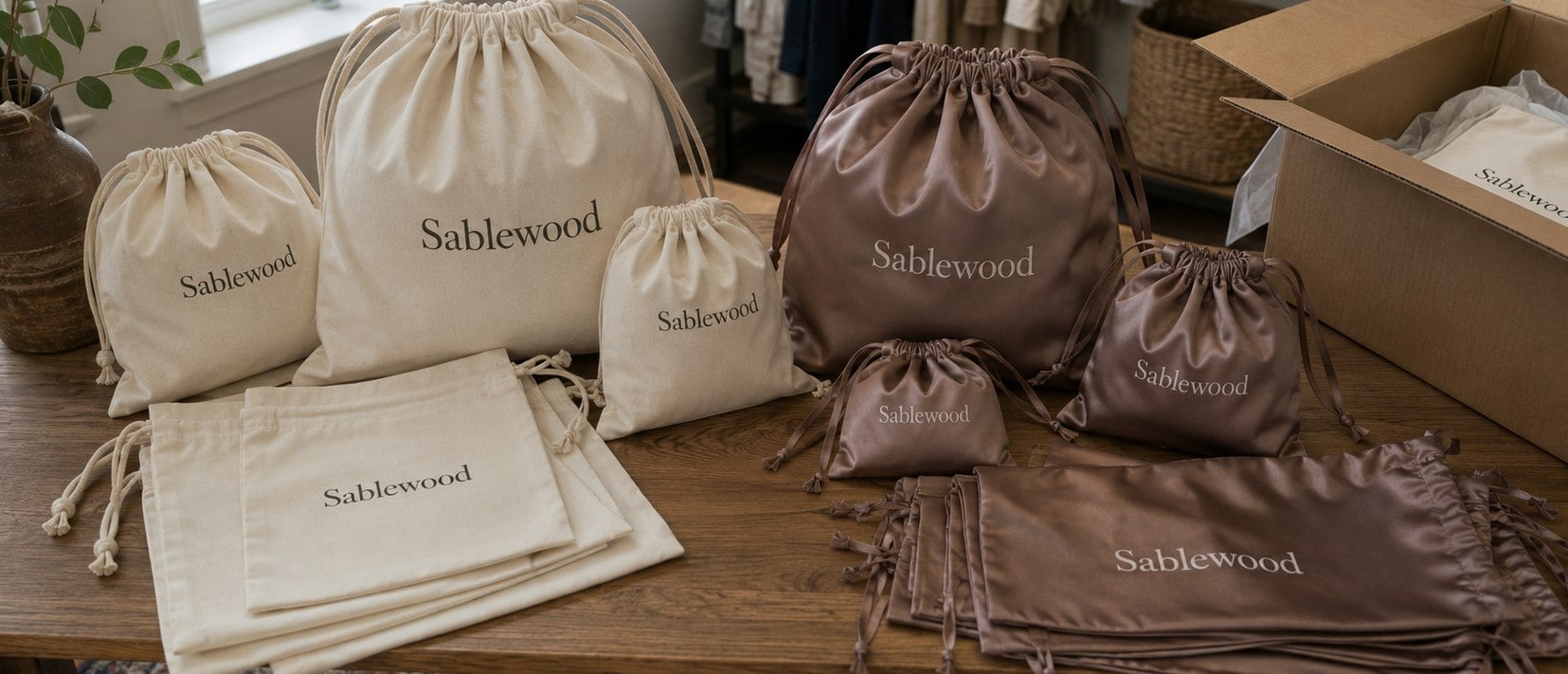
- Measure the product with straps, shapers and hardware in place before choosing a dust bag size.
- Pick fabric for the product it protects, not from a photo.
- Free mockup within 24 hours with unlimited free revisions, and you pay nothing until you approve.
- Minimum order is 12 dust bags; standard turnaround is about 2 weeks, faster with express shipping.
What are the most common mistakes on a first custom dust bag order?
The most common mistakes on a first custom dust bag order are choosing the wrong size, picking a fabric from a photo instead of from the product it will hold, and approving a mockup too quickly. None of these are production problems. They happen in the planning stage, before a single bag is cut, which means every one of them is avoidable.
Brands that order dust bags for the first time usually focus on the logo, because the logo is the part customers see. The logo matters, but a beautiful print on a bag that is too tight for a handbag, or a light cotton that shows every scuff from a shoe sole, will still disappoint. The decisions that protect the product and the unboxing experience are size, fabric, closure and color, in roughly that order.
The good news is that a first order is low risk when you plan it well. Customized Dust Bags starts at a minimum of 12 dust bags, sends a free mockup within 24 hours and offers unlimited free revisions, and you pay nothing until you approve the design. That gives you room to get the details right before anything is produced. The sections below walk through each mistake and the simple check that prevents it.
How do I avoid ordering dust bags in the wrong size?
Avoid the wrong size by measuring the actual product in the shape it will travel in, then choosing a dust bag with comfortable room around it. A handbag with its strap tucked inside, a boot with a shaper, or a framed jewelry box all take up more space than the bare item. Measuring a flat product and ordering a snug bag is the single most common sizing error.
A dust bag that is too tight strains the seams, makes the drawstring hard to close and can press hardware into leather or suede. A bag that is far too large looks loose and cheap, and the product slides around inside it during shipping. The goal is a bag the customer can slip the item into without forcing it, with the opening closing neatly above it.
- Measure width, height and depth with any stuffing, shapers or hardware in place.
- Note whether straps, chains or handles will be inside the bag or folded over the top.
- If you sell several product sizes, list each one rather than picking an average.
- Compare against the large dust bag and the standard options on the custom dust bags page before you request a quote.
When in doubt, send the measurements with your quote request and let the Customized Dust Bags team suggest a size. That one step prevents most sizing regrets.

Why does fabric choice go wrong, and how do I pick the right one?
Fabric choice goes wrong when a brand picks the material that looks best in a photo rather than the one that suits the product, the brand and the way customers will use the bag. Each dust bag fabric has a different feel, weight and look, and the wrong match can make a premium product feel ordinary or a casual product feel overdressed.
Think about what the bag needs to do first. Heavy shoes and structured handbags need a sturdier fabric that holds its shape. Fine jewelry and silk accessories suit a smooth, soft surface. Eco-focused brands often want natural cotton that matches their story. Then consider color: light fabrics show dust and handling marks, which matters for shoes and for bags customers will reuse for storage.
| Fabric | Best suited to | Watch out for |
|---|---|---|
| Cotton | Handbags, shoes, everyday retail, natural-fiber brands | Light shades show marks on footwear |
| Flannel | Leather goods and items that need a soft, brushed surface | Fine logo lines can soften on the nap |
| Satin | Jewelry, lingerie, beauty and gift sets | Smooth sheen can feel too formal for rugged products |
| Felt | Structured items and a thicker, cushioned feel | Bulkier, so allow extra room in shipping boxes |
| Non-woven | Lightweight, budget-conscious packaging and events | Less of a keepsake feel than woven fabrics |
If two fabrics both seem right, describe the product and the brand feel you want in the quote request. Customized Dust Bags can show both in the mockup stage so you compare them side by side.
What mockup approval mistakes should I watch for?
The biggest mockup approval mistake is signing off after a quick glance on a phone screen. A free mockup from Customized Dust Bags arrives within 24 hours, and because revisions are unlimited and free, there is no reason to rush. Treat the mockup as the final check on everything that will be printed, not just a preview of the logo.
Errors that slip through at this stage tend to be small and permanent: a misspelled website, an old logo version, a print color that does not match your brand, or a logo placed where the gathered drawstring opening will hide part of it. Once production starts, those details are locked in across the whole run.
- Open the mockup on a larger screen and read every word of text out loud.
- Confirm the logo file is your current version, not one from an older website or social profile.
- Check that the print color reads clearly against the fabric color.
- Look at where the logo sits relative to the drawstring and the bottom seam.
- Ask one other person on your team to review it before you approve.
If anything feels off, request a revision. Asking for a change costs nothing, while approving a mistake means living with it on every bag.
Is it a mistake to leave out details in a dust bag quote request?
Yes, a thin quote request is one of the quieter mistakes on a dust bag order, because it creates back-and-forth that eats into your timeline. A request that says only “logo dust bags, please” forces the team to guess at size, fabric, print color and delivery date, and each question adds a round of email before a mockup can start.
A complete request lets the mockup come back right the first time. Include the details below, and attach your logo in the best file you have. The how it works page explains what happens after you submit.
- The product going inside each bag, with measurements.
- Your preferred fabric, or the feel you want if you are unsure.
- Fabric color and drawstring color.
- Logo color, or a note that you want it matched to your brand.
- Quantity, starting from the minimum of 12.
- The date you need the bags in hand, plus the delivery address.
The delivery date matters most. Standard turnaround is about 2 weeks, and faster turnaround is available with express shipping, but the team can only plan around a deadline they know about. Sharing it up front avoids the most stressful mistake of all: discovering too late that the bags will not arrive before launch.
Which closure and finishing details do first-time buyers overlook?
First-time buyers often overlook the drawstring, even though the closure is the part customers touch every time they open the bag. A drawstring in a clashing color, a cord that feels flimsy, or a string too short to tie neatly can undercut an otherwise premium dust bag.
Match the drawstring to the overall look. A tonal drawstring in the same shade as the fabric feels quiet and refined, which suits luxury handbags and jewelry. A contrasting drawstring that echoes your logo color feels more playful and works well for lifestyle brands, gift sets and holiday packaging. Either choice is fine; the mistake is not choosing at all and accepting whatever is standard.
Also think about how the bag will look when it is closed versus open. A dust bag photographed in an unboxing video is usually shown closed, so the gathered top and the cord are part of the first impression. If you are planning seasonal packaging, the holiday gift packaging guide covers color pairings that work for gifting.
Should one dust bag design cover every product I sell?
One dust bag design can cover several products, but forcing a single size and style across very different items is a common first-order mistake. A dust bag that fits a pair of loafers will swallow a small clutch, and a bag sized for a tote will look awkward around a wallet.
A better approach is to group products by shape and size, then decide how many bag sizes you truly need. Many brands find that a small and a large dust bag cover most of the range, with the same fabric, color and logo for a consistent look. Keeping the branding identical across sizes means the line still feels unified, even though the bags differ.
Mixing sizes is also easier than many buyers expect. The minimum of 12 applies per order, and Customized Dust Bags can help you plan how to split a run across sizes so each product gets a bag that fits. If you sell jewelry alongside larger goods, the dust bags for jewelry brands page shows how smaller items are usually handled.
What should I check when my custom dust bags arrive?
Check a sample of custom dust bags as soon as the box arrives, before they go to the packing table. A quick inspection while there is still time before launch is far better than finding an issue while a customer order is waiting.
Pull a handful of bags from different parts of the carton and compare them to your approved mockup. Look at the print position, the print color, the drawstring and the seams. Then put your actual product inside a few bags to confirm the fit feels right in real life, not just on paper.
- Logo print is clear, centered and in the approved color.
- Drawstrings pull smoothly and close the opening fully.
- Seams are even and the bag holds your product without strain.
- The count matches what you ordered.
Store unused dust bags flat or loosely stacked in a clean, dry spot so they stay crisp for the next order. If anything looks wrong, contact Customized Dust Bags right away with photos so the team can sort it out quickly.
Frequently asked questions
What is the most common mistake brands make on a first custom dust bag order?
The most common mistake on a first custom dust bag order is choosing a size from flat measurements instead of measuring the product with straps, shapers or hardware in place. The result is a bag that strains at the seams or will not close neatly. Customized Dust Bags recommends sending real measurements with every quote request so the team can confirm the fit before any mockup is made.
Can a dust bag that is too tight damage the product inside?
A dust bag that is too tight can press metal hardware, zippers or buckles into leather and suede, leaving marks over time. A snug bag also stresses the seams and makes the drawstring hard to close. Choose a bag with comfortable room around the item so customers can slide the product in and out easily without forcing it or bending its shape.
Is it a mistake to choose dust bag fabric only from a photo?
Choosing dust bag fabric only from a photo often leads to disappointment, because screens hide weight, softness and how a fabric shows marks. Start with what the bag must protect, then pick the fabric that suits it, such as cotton for handbags or satin for jewelry. Customized Dust Bags can show more than one fabric at the mockup stage so you can compare.
What happens if I approve a dust bag mockup with a typo?
A dust bag mockup approved with a typo means the error is printed on every bag in the run, since production follows the approved design exactly. Read every word aloud on a large screen before you sign off, and ask a teammate to check too. Revisions are free and unlimited, so requesting one more round costs nothing and protects the whole order.
Can a drawstring that is too short be a problem on dust bags?
A short or thin drawstring can make dust bags look unfinished, because the cord cannot tie into a neat bow or close the opening fully. The closure is the part customers touch most, so it shapes how premium the packaging feels. Mention your preferred drawstring color and style in the quote request so the mockup shows the finished closure, not a default.
Why do light-colored dust bags sometimes look dirty in customer photos?
Light-colored dust bags show dust, scuffs and handling marks more readily than darker shades, especially when they hold shoes or are reused for storage. Those marks can appear in unboxing photos and reviews. If your product is footwear or something handled often, consider a mid-tone or darker fabric, and pair it with a logo color that still reads clearly against it.
Should one person own the dust bag order from quote to delivery?
Assigning one person to own a dust bag order prevents mixed messages, missed approvals and conflicting logo files. That owner gathers measurements, confirms the fabric, reviews the mockup with the team and tracks delivery against the launch date. Customized Dust Bags can then work with a single point of contact, which keeps revisions quick and the timeline on track.
Is it a mistake to use the same dust bag for shoes and handbags?
Using one dust bag for both shoes and handbags often fails, because the two products differ in shape, weight and how dirty they get. Shoes usually need a pair of bags or one wide bag in a darker fabric, while handbags need depth for structure and straps. Plan a size for each product type, keeping the same logo and color for a unified look.
What should I check when custom dust bags arrive before packing them?
Check a few custom dust bags from different parts of the carton against your approved mockup as soon as the box arrives. Confirm the logo position and color, test the drawstring, inspect the seams and place your product inside to check the fit. Customized Dust Bags asks for photos of any concern so the team can resolve it quickly before launch.
Why should I tell the supplier what product goes inside the dust bag?
Telling the supplier what goes inside each dust bag helps match size, fabric and closure to the real item instead of a guess. A watch, a boot and a tote each need a different shape and weight of bag. The more you share about the product and how customers will use the bag, the closer the first mockup will be to what you want.
Does leaving out the delivery deadline cause problems on a dust bag quote?
Leaving the deadline off a dust bag quote request is risky, because the team cannot plan production or shipping around a date they do not know. Standard turnaround is about 2 weeks, and faster turnaround is available with express shipping. Sharing your in-hand date up front lets Customized Dust Bags flag timing concerns early rather than after the design is approved.
Can I fix a dust bag color choice after the mockup stage?
Dust bag fabric, drawstring and print colors can all be changed during the mockup stage, since revisions are free and unlimited until you approve. After approval, production begins and colors are locked for that run. If you are unsure, ask to see two color pairings in the mockup so you can choose with confidence before giving the final go-ahead.
Get a free mockup for your dust bags
Send your logo or idea and the quantity you have in mind. Customized Dust Bags returns a free mockup within 24 hours, you approve the design before anything is produced, and standard turnaround is about two weeks with faster options available. Get a custom quote.