The fabric decides how a dust bag feels; the decoration method decides how your brand looks on it, how long that logo survives, and how much the run costs. A one-color wordmark on a natural cotton pouch and a full-color crest on a dark flannel sleeve are not the same job, and they rarely suit the same process. Before you approve artwork, it helps to know what each common method actually does well on a soft, lightweight bag, and where each one struggles.
Four techniques cover the vast majority of custom dust bags: screen printing, heat transfer (including DTF), embroidery, and foil stamping. Each one trades off color range, durability, hand feel, setup cost, and the smallest order that makes sense. The sections below walk through them in the order most buyers should consider them, then close with how to match a method to the size and look you are after.
Screen printing: the default for one- or two-color logos
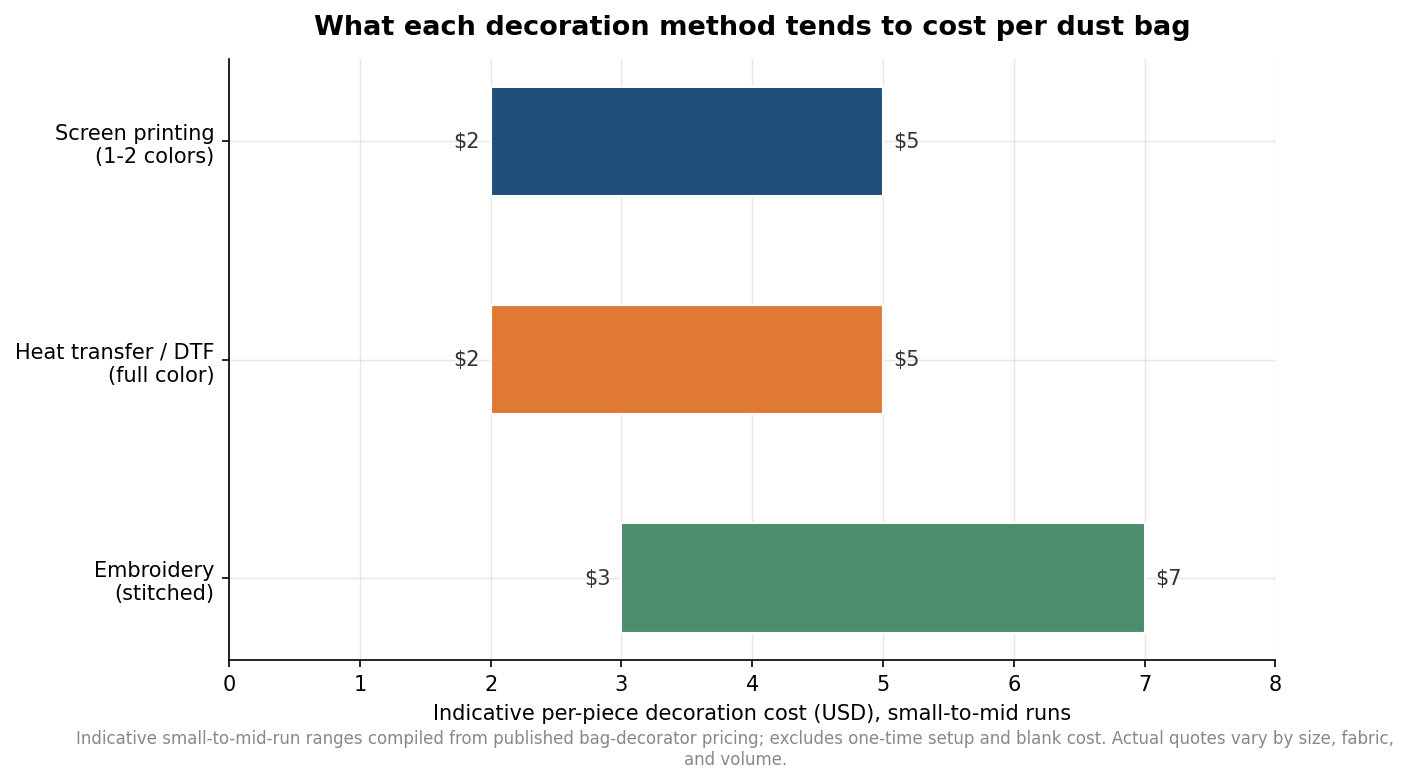
Screen printing pushes ink through a stencil, one screen per color. It is the workhorse of fabric decoration because, once the screens are burned, the marginal cost of each additional print is low. That is exactly why it rewards volume and simple art. Published decorator pricing tends to put screen printing in the range of roughly two to five dollars per piece for small-to-mid runs, before the blank and any one-time setup. The catch is that setup: you pay a screen fee for every ink color, so a crisp one- or two-color logo is efficient while a six-color gradient is not. In practice most shops recommend keeping screen-printed dust bag art to one or two solid colors, even where the process can technically handle more.
On cotton and cotton-blend dust bags, screen printing lays down opaque, durable color that holds up to handling and the occasional wash. It is the safe answer when you have a clean logo, a run in the hundreds or thousands, and you want a consistent look across the whole order. Where it falls down is photographic detail, fine gradients, and very short runs where the per-color setup has too few pieces to spread across.
Heat transfer and DTF: full color and short runs
Heat transfer applies a pre-printed design to the fabric with heat and pressure. The newer direct-to-film (DTF) variant prints the artwork onto a film, then bonds it to the bag, and it has largely displaced older vinyl and paper transfers for detailed work. The appeal is range: transfers handle full-color images, gradients, and small photographic detail that screen printing cannot, and because there is little per-color setup, they stay economical on short runs and one-offs. Indicative per-piece pricing sits in a similar two-to-five dollar band for small-to-mid quantities, but without the color surcharges, so a ten-color badge costs about what a two-color one does.
The trade-offs are hand feel and, sometimes, longevity. A transfer sits on top of the fabric rather than soaking in, so a large solid area can feel like a patch and make a thin cotton bag stiffer where the design lands. Durability is generally rated moderate: good for the life of a dust bag that lives inside a shoebox, less bulletproof than stitching for something handled daily. Reserve transfer methods for detailed or multicolor art, or for runs too small to justify screens.
Embroidery: durability and a premium hand
Embroidery stitches the design in thread rather than printing it. It is widely regarded as the most durable decoration method, and it reads as premium, which is why it shows up on higher-end pouches and heavier bags. Cost is driven by stitch count rather than color count, so adding colors does not add much, but a dense or large design does; published ranges commonly land around three to seven dollars per piece, a step above printing. Because there is no per-color setup in the screen-printing sense, embroidery can be workable even on smaller runs.
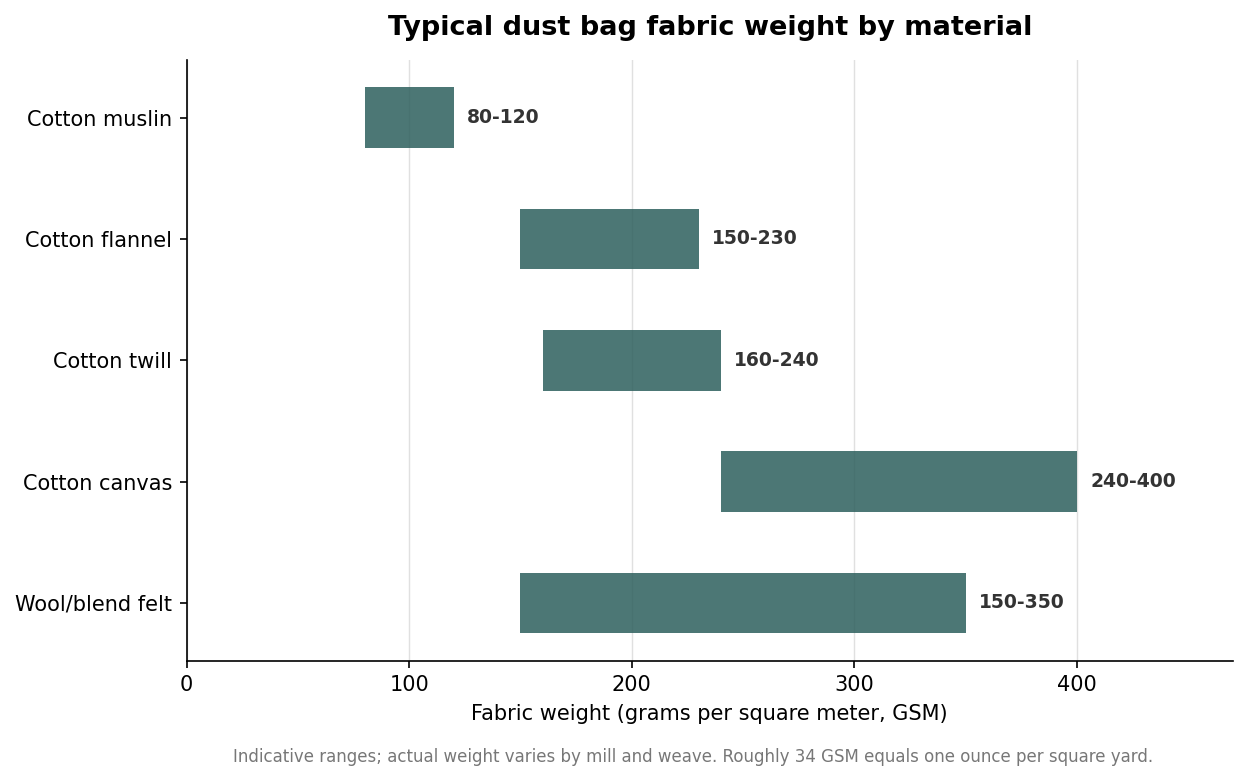
The important caveat is fabric weight. Dust bags are usually made from light cotton, flannel, or non-woven material, and thin fabric can pucker or distort under a heavy stitch. Embroidery shines on thicker, structured bags and on smaller marks like a compact logo or monogram; it is a poor match for fine detail, gradients, or a large fill on a flimsy panel. If you want the durability of stitching on a lightweight bag, keep the design small and ask about a backing to stabilize the fabric.
Foil stamping: metallic marks for luxury packaging
Foil stamping uses a heated die to press metallic film into the fabric, most often in gold or silver. It exists for one reason: a high-end, reflective mark that print inks cannot reproduce. On a dark dust bag intended as retail packaging, a foil logo signals luxury in a way a flat print does not. It is essentially a single-color metallic effect per die, and it becomes labor-intensive and expensive if you try to build a multicolor design from it, so it works best as a clean wordmark or emblem. Treat foil as a finish you choose for positioning rather than for versatility, and expect the quote to depend heavily on the die and the fabric.
One method worth ruling out for most dust bags is dye sublimation. It produces beautiful full-color, photo-quality results, but only on polyester or other synthetic, light-colored fabrics. Because dust bags are usually natural cotton or flannel, sublimation rarely applies unless you have specifically chosen a polyester bag.
Matching the method to your order
Two questions settle most decisions: how many are you ordering, and how complex is the art. For a simple one- or two-color logo at a few hundred pieces or more, screen printing is almost always the most cost-effective choice, and it gets cheaper per piece as the run grows because the fixed screen setup spreads across more bags. For detailed, multicolor, or photographic art, or for short runs where screen setup would dominate, a transfer method like DTF is the practical pick. When durability and a premium feel matter more than price and the bag is substantial enough to carry stitching, embroidery earns its higher cost. When the goal is a luxury metallic mark on darker packaging, foil stamping does what nothing else can.
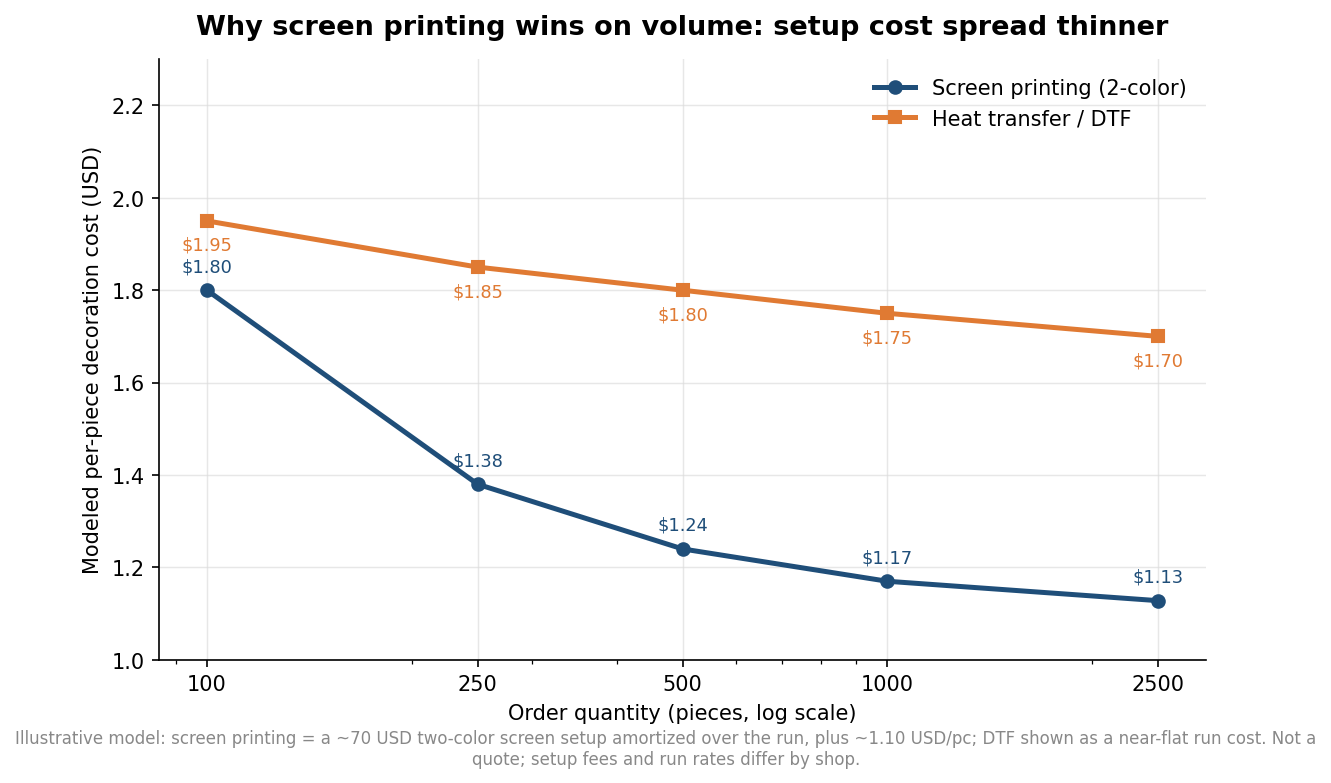
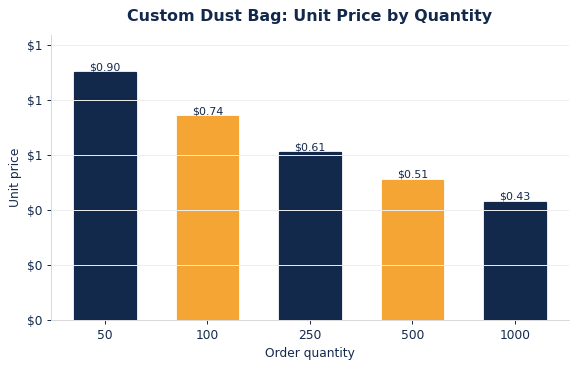
The chart above shows why the volume question matters so much. A screen-printed run carries a fixed setup that is painful at one hundred pieces and nearly invisible at a few thousand, while a transfer method starts cheap and stays roughly flat. Somewhere in the low hundreds the two cross over, which is why the same logo can call for different methods depending only on how many bags you need. The figures are an indicative model, not a quote, so treat the crossover as a rule of thumb and confirm it against real setup fees and run rates when you request pricing.
When you do request a quote, give the decorator the three things that actually move the number: final art with an exact color count, the bag fabric and size, and the order quantity. Those determine which method is viable and what it will cost far more than any published range can. Decide the look you want first, then let the run size and fabric steer you toward the process that delivers it without paying for capability you will not use.